





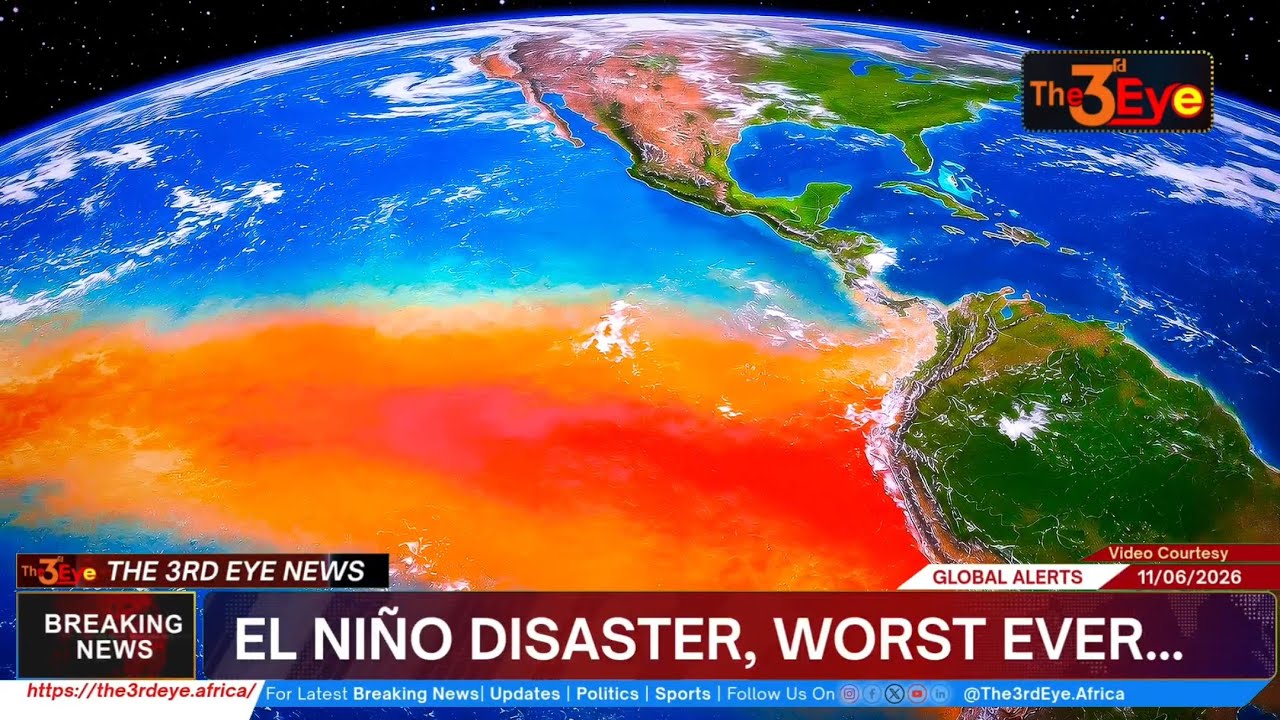
A powerful climate phenomenon is rapidly developing in the Pacific Ocean, threatening to upend global weather patterns and bring severe, unpredictable climate extremes to Kenya.
The World Meteorological Organization (WMO) and the Kenya Meteorological Department (KMD) have confirmed an 80% chance of El Niño developing between June and August 2026. This probability surges past 90% for the latter half of the year. Global climate models warn that this event could intensify into a rare, record-breaking “Super El Niño,” threatening to shatter global temperature records and trigger intense humanitarian and economic challenges.
For Kenya, meteorologists predict a dangerous, two-phased climate trajectory. This split pattern will require immediate, aggressive preparation from both national authorities and local communities.
Phase 1: The Mid-Year Dry Spell (June–August)
Contrary to the popular belief that El Niño only brings torrential rain, the initial phase will plunge large parts of Kenya into unseasonable dryness.
- The Dry Zones: The Highlands West of the Rift Valley, the Lake Victoria Basin, and Northwestern Kenya are forecast to experience below-average rainfall. Meanwhile, the Southeastern and Northeastern regions will remain hot, sunny, and dry.
- The Cold Nairobi Pocket: Nairobi and surrounding areas are bucking the warming trend for now, bracing for an influx of cool, cloudy, and heavily drizzled days.
- The Coastal Exception: The Coastal strip remains the only region expected to receive near-average to slightly above-average rainfall during this initial window.
Phase 2: The Late-Year Flood Threat (October–December)
The true danger for East Africa lies in the final quarter of 2026. As the Super El Niño reaches peak maturity, it is expected to lock arms with a positive Indian Ocean Dipole (IOD)—a local ocean phenomenon often referred to as the “El Niño’s cousin.”
When these two climate systems align, they act as an atmospheric atmospheric pump, dumping massive amounts of moisture over East Africa. Experts warn that the Short Rains season (October to December) could trigger catastrophic nationwide flooding, mudslides, and widespread infrastructure destruction, mirroring the devastating floods of late 1997 and 2023.
The Global Picture: A Planet on Edge
Kenya is not alone in the crosshairs. Globally, the Super El Niño is projected to supercharge global warming, pushing 2026 temperatures to near-record or record heights.
While East Africa, the southern United States, and Peru brace for extreme deluges, other parts of the world will burn. Severe, crop-threatening droughts are currently forecast for Central and Southern Africa, northern South America, Australia, and Southeast Asia. Conversely, the high wind shears produced by El Niño are expected to suppress the Atlantic hurricane season, offering a brief respite to the Caribbean and US East Coast.
Agriculture and Economy at Risk
The split nature of the 2026 El Niño poses a double-edged sword for Kenya’s agricultural sector. Small-scale farmers face an immediate threat from the mid-year dry spell, which could stunt crop development during critical growing phases. If followed by torrential flooding in October, remaining crops could be washed away entirely, severely threatening national food security.
The Kenya Meteorological Department is urging sector managers in agriculture, water, and disaster management to begin activating contingency plans immediately.